
When History Remembers ...
There are patterns you begin to recognize after spending time in community. They are not abstract. They are lived. They show up in how people move through systems, carefully, thoughtfully, sometimes quietly, not because they want to, but because they have learned that this is how you stay safe.
To understand this, we have to speak plainly about history.
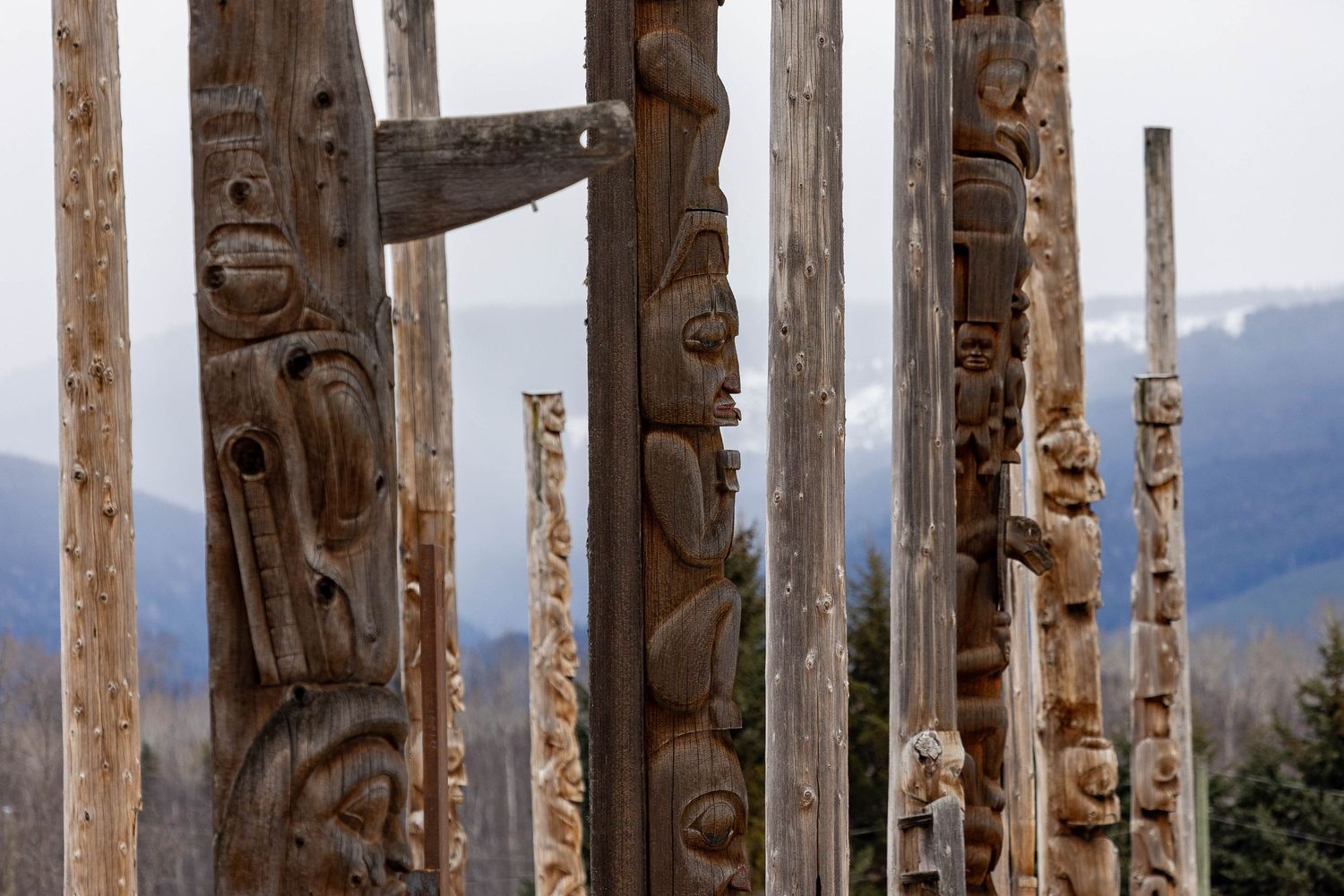
There was a time in this country when children were hidden to protect them from being taken. Families made decisions often in fear, often in urgency to keep their children close, to keep their language alive, to protect what could still be protected. Gathering was restricted. The potlatch was banned. Cultural practices were monitored, controlled, or pushed out of public view. Movement itself was regulated, with permission required to leave reserve communities under what became known as the pass system.
These are not distant memories. They are carried forward.
And while the policies themselves may no longer exist in the same form, the experience of having to navigate systems carefully, of needing to ask, adjust, or move quietly has not fully disappeared. It lives in the questions people carry into everyday interactions: what is allowed, what needs approval, what must be adapted in order to move forward.
I have been thinking about this in the context of recent changes affecting Indigenous driving schools.
There are now requirements that do not always reflect how learning happens in community, including formalized theory expectations and processes that require crown consent for honoraria when study groups comes together to support individuals to study for a learners license. This seems at odds given that gifts or honoraria are part of longstanding cultural practice including from the crown to Indigenous Elders and speakers. On paper, these may appear administrative. In practice, they can feel familiar.
Not because they are the same as the past, but because they echo it.
The need to seek permission to gather to study for a knowledge test.
The need to adjust cultural practices to fit within external systems.
The need to ensure that what is being done is acceptable before it can move forward.
These moments matter.
Because when people begin to feel that they must once again move carefully within a system, that they must check, adapt, or hold back parts of how they operate in order to comply, it does not exist in isolation. It connects to a longer history of navigating authority that has not always been safe or aligned.
This is not about rejecting standards or accountability in drivers licensing. It is about recognizing context. It is about understanding that systems do not operate in a vacuum, they operate within histories, relationships, and lived experience. When those histories are not acknowledged, even well-intentioned policies can create unintended barriers.
The question is not whether we have systems. The question is how those systems are experienced.
At All Nations Driving Academy, we see every day what happens when access to drivers licensing is strengthened and when learning is supported in ways that reflect community realities. We also see what happens when it is not. We see the quiet adjustments communities make, and we see the cost of those adjustments over time.
There is an opportunity here and it sits clearly in front of us.
We invite the Province of British Columbia, including the Attorney General’s office and ICBC, to work alongside Indigenous communities and practitioners to ensure that current directives and policies are aligned not only with legislation, but with the lived realities they are intended to serve. This includes thoughtful consideration of how learning is delivered, how cultural practices such as honoraria are understood, and how requirements are applied in ways that do not unintentionally recreate barriers.
Alignment is not abstract. It is practical. It shows up in whether people can participate fully, without needing to adjust or hide who they are in order to comply.
Because the goal should never be for people to feel that they must move quietly in order to participate.
It should be that they can move fully with clarity, dignity, and confidence within systems that recognize and respect who they are.
Offered respectfully in recognition of those who protected their families, their languages, and their ways of life, often quietly and for those who continue the work of ensuring that future generations no longer have to. ~ Lucy Sager