
Advisory and Policy Support

Introduction
A Commitment to Truth
There's a reason why Truth comes before Reconciliation.
Grounded in Story, Guided by Responsibility
Within Indigenous communities, story is medicine. It carries memory, truth, and responsibility connecting what has happened, what is happening, and what must change.
As All Nations Driving Academy travelled highways and backroads throughout British Columbia, we were entrusted with stories that revealed the deep relationship between driver licensing, safety, and the ongoing impacts of colonization. These stories were not abstract. They reflected lived realities shaped by geography, enforcement-based systems, and generations of exclusion from services designed without Indigenous peoples in mind.
We understood early on that these experiences could not remain unheard.
From Lived Experience to Policy Insight ...
With care and respect for those who shared their stories, we took on the responsibility of translating community realities into conversations with policymakers and public institutions. This meant returning often and repeatedly to Victoria to share what was actually happening in communities and why existing licensing systems were failing to deliver equitable outcomes.
In the early days, we relied heavily on story and imagery to make visible what policy language often obscured. These were not advocacy tactics; they were acts of accountability ensuring that systems designed at a distance were confronted with their real-world impacts.
What became clear was not the failure of individuals, but the design of systems that separated access, safety, and opportunity.
The Road to Reconciliation ...
In late 2020, All Nations Driving Academy was invited by the Union of BC Indian Chiefs to formalize these insights and offer concrete recommendations for change. The resulting document, The Road to Reconciliation, was unanimously endorsed by resolution and directed to ICBC, RoadSafetyBC, and multiple provincial ministries.
The report marked a shift—from individual stories to collective responsibility and called for coordinated, systems-level action grounded in Indigenous experience and leadership.
Where We Are Today ...
Several years later, some of the recommendations outlined in The Road to Reconciliation have been implemented, while others remain unfinished. Research and policy related to Indigenous driver licensing in Canada are still emerging, and meaningful progress continues to be constrained by limited, short-term funding and fragmented responsibility across institutions.
What began as a response to a practical problem has evolved into a long-term commitment to supporting systems change rooted in lived experience, evidence, and Indigenous leadership.
Transportation as a Social Determinant of Health ...
Through this work, one truth has become increasingly clear: transportation security underpins nearly every other social determinant of health.
Access to safe, reliable transportation affects:
- Employment and economic participation
- Education and training
- Safety and freedom from violence
- Health and social services
- Community connection and wellbeing
These challenges are not isolated to one community or region. They reflect global patterns of colonization and the intergenerational impacts that continue to shape access and opportunity today.
Our Role Moving Forward ...
All Nations Driving Academy continues to work alongside communities, governments, and partners to support policy and funding approaches that are realistic, accountable, and grounded in lived experience.
Our role is not to speak for communities, but to help ensure that systems listen, learn, and adapt.
If systems can be built to separate, then they can also be rebuilt to connect.
Our Impact in Practice ...
The approach described here is grounded in years of community-based work and learning. To understand how this work translates into individual, community, and systems-level outcomes, we invite you to explore our Impact & Approach here.
The Road to Reconciliation
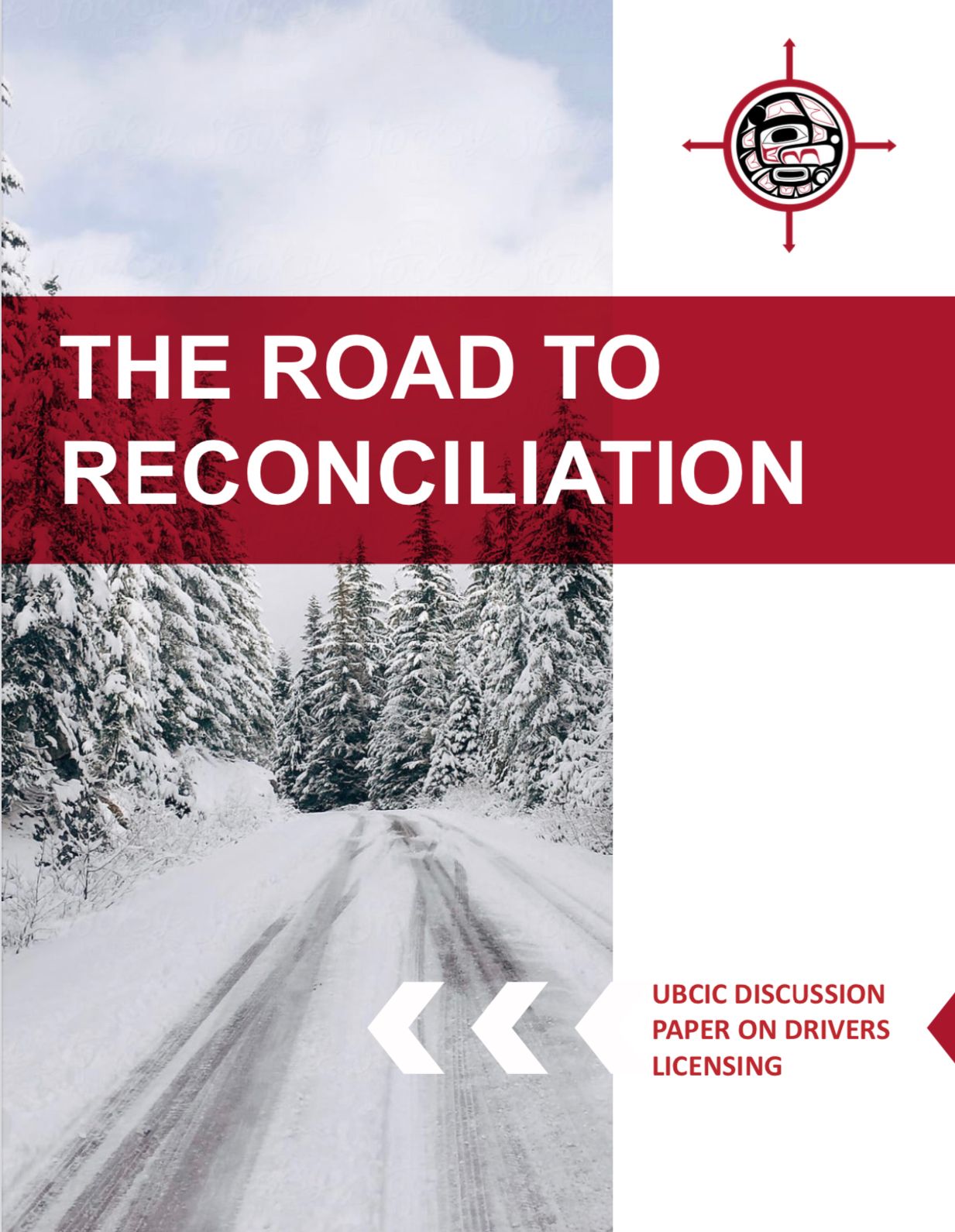
This paper was published with the support of the Union of BC Indian Chiefs in 2021 and tells the story of drivers licensing for Indigenous Peoples in British Columbia while providing recommendations to the provincial government to create change.
An Update on Bill 12 ...
The third reading of Bill 12 known as the Motor Vehicle Amendment Act was passed in the British Columbia Legislature on Tuesday October 21st. This piece of legislation will allow the work to begin to amend the Motor Vehicle Act to make much needed changes to ensure an increase in fairness and equity to those looking to earn a drivers licence in BC.
Pieces of the act will meet the recommendations in the road to reconciliation paper such as lowering the age of consent to sign for your own drivers license from the age of 19 to 18 years old. Other changes coming include removing the class 5 road test and streamlining the drivers licensing process for those drivers who are over the age of 25 years old.
While ICBC is the crown corporation who oversees the issuance of a drivers license, it is the organization Road Safety BC who holds the motor vehicle act legislation and will work to write the regulations that will allow for these changes.
All Nations Driving Academy is committed to following up on this work and providing updates as they come available.
Road to Reconciliation Recommendations
From the time of publication, work has been completed and continues to progress on recommendations made in the Road to Reconciliation policy paper. It is important that you know what options are available to you when going to take your knowledge test or road test and how this work is hopefully easing the burden of travel, cost and historical challenges.
While there is still much to do, we are extremely proud to have witnessed the following recommendations see completion.
The following recommendations have been completed -
6.) ICBC will administer consistent delivery of the class 7L test through computer kiosk in all appointed agent offices. Computer kiosks will also provide access to headphones so that students can at their discretion have the test read to them without the need to schedule an appointment for support.
7.) ICBC will review and adjust, as needed the use of certain road test routes in communities where residential schools once existed to minimize and further reduce in-vehicle related trauma.
8.) ICBC will allow the selection of the gender of the driving examiner upon booking a road test. This will further reduce the impacts of any in-vehicle related trauma.
11.) The government will mandate relevant cultural competency training for all employees of Road Safety BC specific to the impacts of drivers licensing and Indigenous communities understanding the link to inter-generational trauma and the Truth and Reconciliation Report.
While this list may seem short compared to the 45 recommendations in the paper, several other recommendations are underway. We look forward to providing updates as they move to a place of completion.
If you have specific questions on how the recommendations may impact your community, please do not hesitate to contact us for more details.